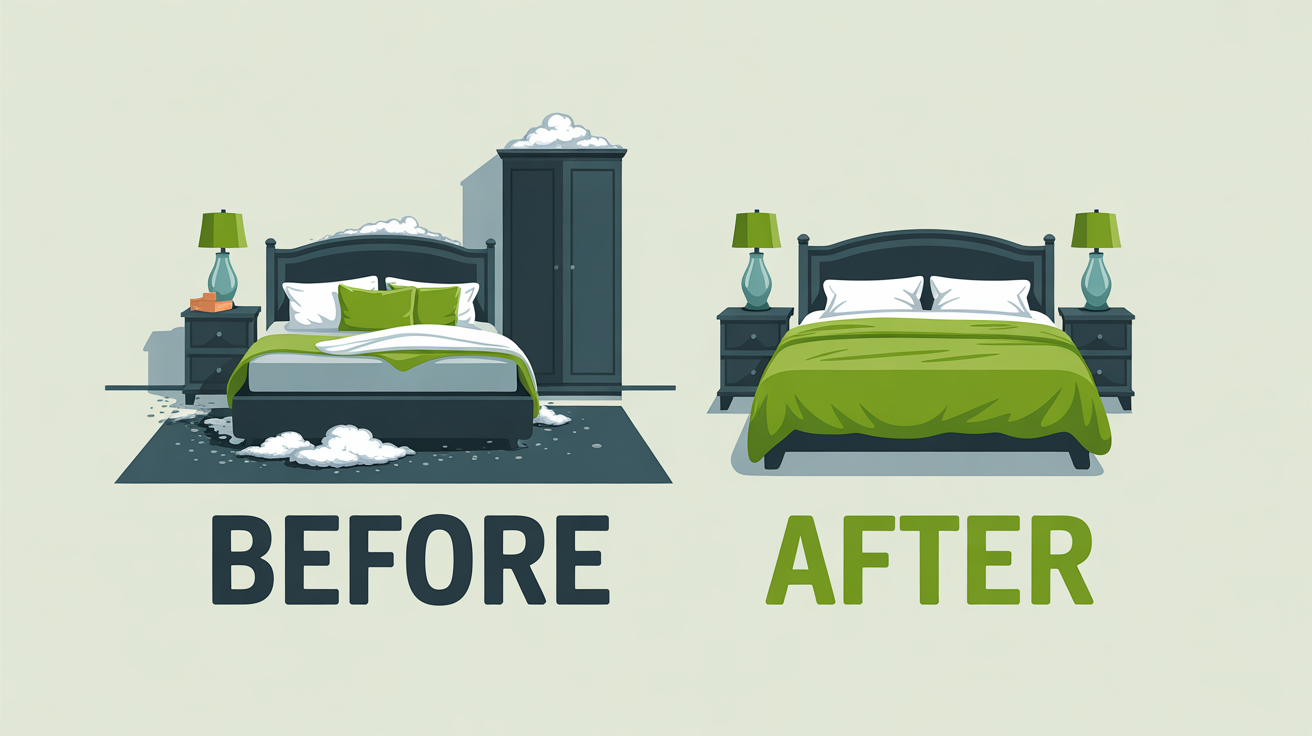
A regular bedroom clean takes 10 minutes — make the bed, vacuum the floor, dust the bedside table. A deep clean takes 45 minutes and does the work that affects your sleep, your allergies, and the longevity of your mattress. Here is what we cover, in what order, and why every bit matters.
Why the bedroom needs more than surface cleaning
You spend a third of your life in this room. Anything that lives in mattresses, bedding, carpets, or curtains affects sleep quality and respiratory load. Healthdirect estimates a single mattress can carry several million dust mites. Pet dander accumulates in soft furnishings. Pollen settles on every surface in spring. A bedroom deep clean addresses all four of these in 45 minutes.
Step 1 — Strip the bed completely
Off comes everything — duvet cover, pillow cases, sheets, mattress protector, pillow protectors. Wash the lot at 60°C if the fabric allows (kills dust mites).
- Strip all bedding to the bare mattress
- Wash bedding at 60°C+
- Check mattress protector — replace if torn or stained
- If pillows are 2+ years old, consider replacing — they hold a lot
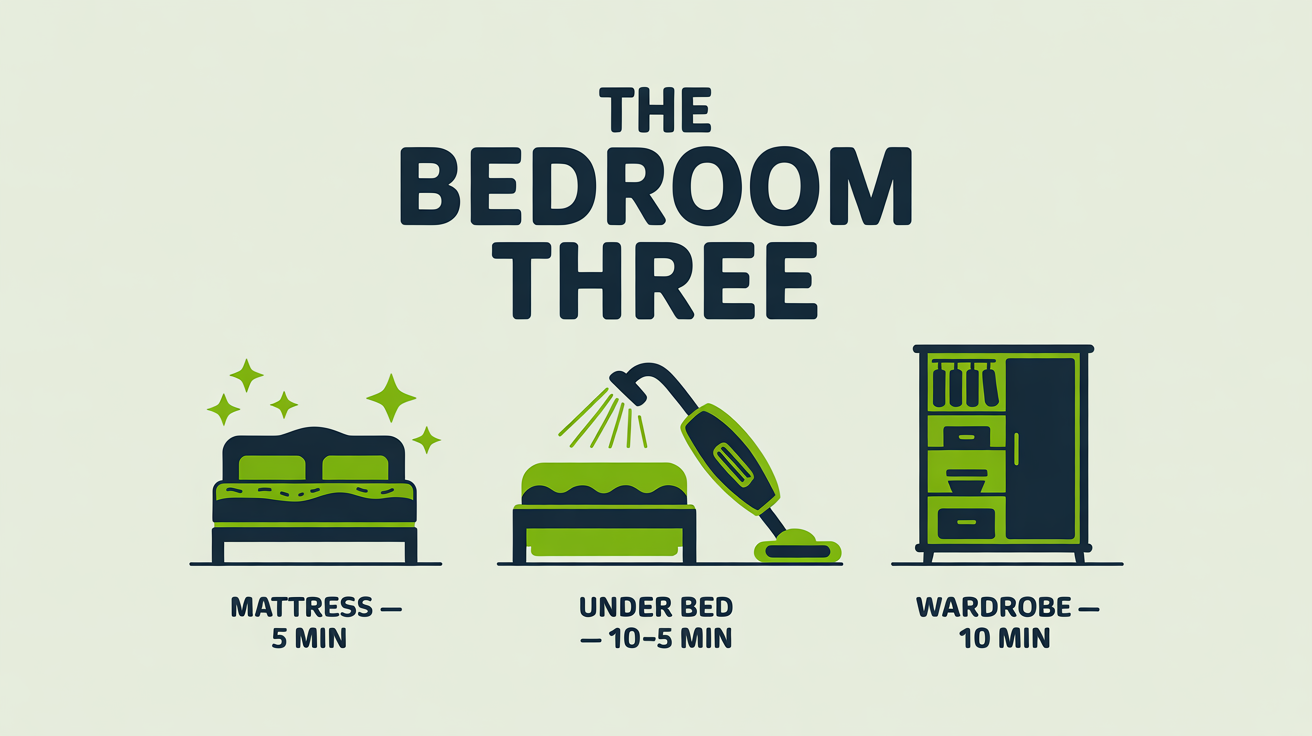
Step 2 — Vacuum the mattress
The single most-skipped step in any bedroom clean. A 5-minute HEPA vacuum of the mattress drops dust-mite populations by 70-80%.
- Vacuum mattress top, sides, and bottom with HEPA-rated upholstery attachment
- Pay extra attention to seams — that’s where mites live
- Flip the mattress if it is double-sided (annual rotation)
- Vacuum pillows individually
- Lightly mist with a tea-tree-oil + water solution if you want (natural mite deterrent)
Step 3 — Move the bed and vacuum underneath
Under the bed is the second-worst dust zone in any bedroom — slim, hard to reach, and almost never cleaned. Pet hair, dust bunnies, and lost socks accumulate here.
- Move the bed out from the wall — easier with two people
- Vacuum the floor thoroughly underneath
- Wipe skirting boards around the bed perimeter
- Check the wall behind the bed — wipe any scuff marks
- Vacuum behind the headboard if applicable
Want bedrooms that actually help you sleep?
Free walkthrough. HEPA-vacuumed mattresses included.
Step 4 — Wardrobe and storage
Inside the wardrobe is rarely deep-cleaned. Dust falls onto shelves, settles into stored bedding, and sticks to clothes that haven’t been moved in months.
- Vacuum wardrobe floor
- Wipe shelves and back wall
- Check stored bedding — refold and brush off dust
- Vacuum under-bed drawers
- Wipe drawer interiors of any bedside tables
Step 5 — Curtains, blinds, ceiling fan, light fittings
The high zones collect dust silently. They are also the easiest to skip — and the easiest place for allergens to live.
- Vacuum curtains top to bottom (use a soft brush head)
- Wipe blind slats individually
- Dust ceiling fan blades top and bottom
- Wipe lampshades and light fitting interiors
- Wipe smoke detector housing
Step 6 — Final pass and reset
Now reset everything that was moved. Make the bed with fresh linen. Reload the wardrobe. Final vacuum.
- Replace mattress protector and clean bedding
- Make the bed properly (hospital corners for crisp finish)
- Replace pillows with fresh covers
- Reload wardrobe
- Final vacuum across the whole floor
- Mop hard floor sections
Weekly habits that keep the bedroom fresh
These four habits hold the line between deep cleans. Single highest-impact: hot-wash bedding weekly.
- Hot-wash bedding every 1-2 weeks (60°C+)
- Vacuum the floor weekly with HEPA
- Open windows daily for 15 minutes to air out
- Use a dehumidifier in winter to keep humidity under 50%
Request a free quote or call 0493 295 032.
- ✓Allergies or asthma flare in the morning
- ✓Bedding feels slightly damp or musty
- ✓Visible dust on top of wardrobe
- ✓Mattress hasn’t been vacuumed in 6+ months
- ✓Under-bed hasn’t been cleaned in 6+ months
- ✓Pillow yellowing through the cover
- ✓Stored bedding smells stale when used
Frequently Asked Questions
How often should I deep clean my bedrooms?+
Will you vacuum mattresses?+
Should I rotate or flip my mattress?+
Will you take stored boxes out from under the bed?+
Can you clean the kids’ rooms while they’re at school?+
Do you change linen?+
Will you wipe inside drawers and wardrobes?+
Are tea-tree oil mattress sprays effective?+
Sources & further reading
- Dust mites — fact sheet Healthdirect Australia
- Pet dander and allergies in the home Australasian Society of Clinical Immunology and Allergy
- Indoor allergens and asthma triggers Asthma Australia
- Cleaning the home — Better Health Channel Victorian Department of Health
- Indoor air quality at home — guidance Australian Government Department of Health
Ready for a Real Bedroom Reset?
Free quote. Fixed price. HEPA-rated. Wangaratta + 90 towns across Northeast Victoria.