If hayfever, asthma, or eczema kicks in the moment you walk through your own front door, the cause is usually three invisible things compounding inside the home — dust mites, pet dander, and surface mould. A deep clean targets all three, but only if it’s done the right way, on the right schedule.
Why allergies change the deep-cleaning game
For a household with no allergy sensitivities, deep cleaning is mostly about appearance and longevity — taps stay shiny, grout stays white, surfaces stay easy to maintain. For an allergy household, it is about something measurable: symptom load. Asthma Australia estimates that 1 in 9 Australians lives with asthma, and roughly 80% of those flare on triggers found inside the home — specifically dust mites, animal dander, and damp-related mould.
The practical implication is that frequency, technique, and tooling all change. A six-monthly schedule that works fine for a healthy couple is not enough for a family with one asthmatic. The cleaner has to bring a HEPA-rated vacuum, not just any vacuum. And the order of operations matters more — going from carpets to fabric to surfaces in the wrong order re-aerosolises the trigger you just cleaned.
The three triggers we target — what they are and where they hide
Knowing where each trigger lives is half the job. Each one has a different home base in your house, and each one needs different handling.
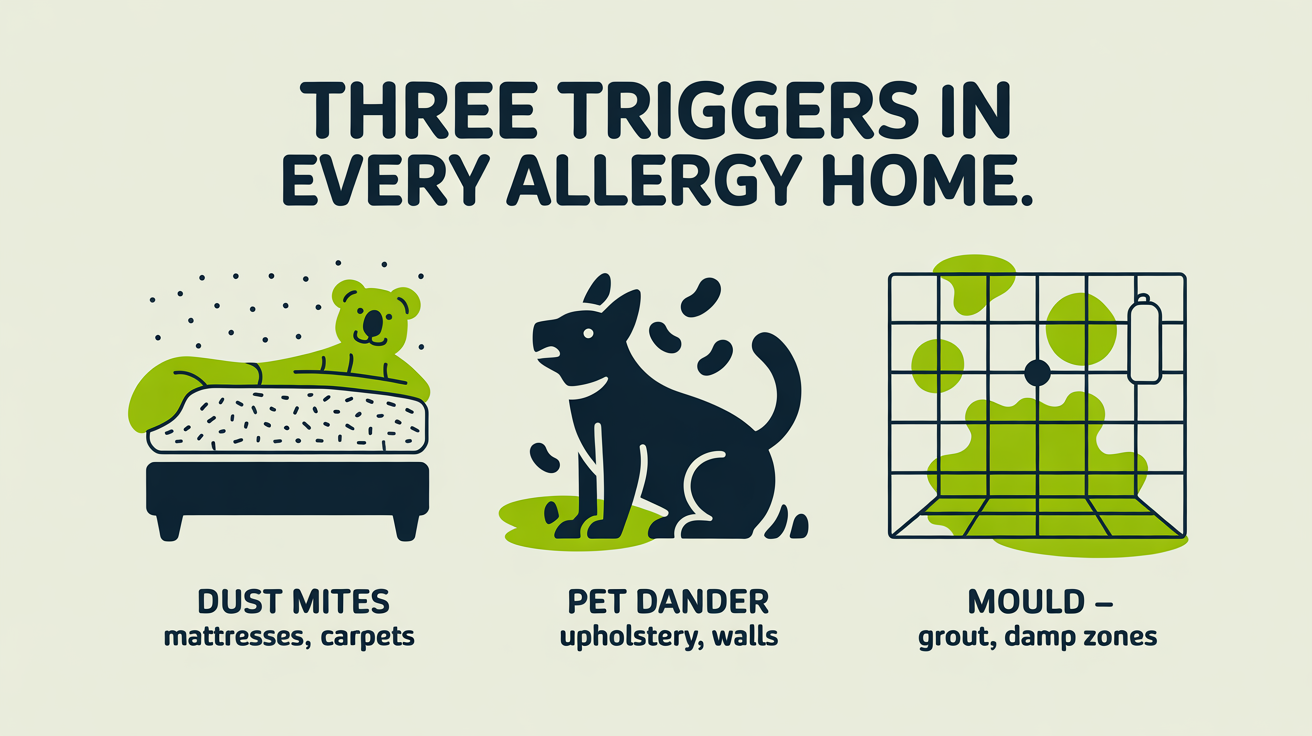
- Dust mites. Microscopic. Feed on flakes of human skin. Live in mattresses, pillows, sofas, carpets, soft toys. It is not the mite itself that triggers — it’s their droppings, which become airborne with movement. A single mattress can carry a few million.
- Pet dander. Tiny flakes of skin shed by cats, dogs, rabbits, birds. Sticks to upholstery, carpet, curtains, clothing, walls. Persists for months in fabric even after the pet has gone. Cat dander is the smallest and most persistent.
- Mould spores. Released by mould colonies in damp areas — bathroom grout, behind washing machines, leaking window seals, behind furniture against an external wall. Even small colonies release millions of spores. Reactive cleaning of the visible patch is not enough — you have to find and fix the moisture source.
A useful mental model: dust mites are a mattress and carpet problem, pet dander is a soft-furnishings and air problem, mould is a moisture problem. A proper allergy-focused deep clean addresses each one in its home base, not just where you can see it.
How often: the 3-month rule for allergy households
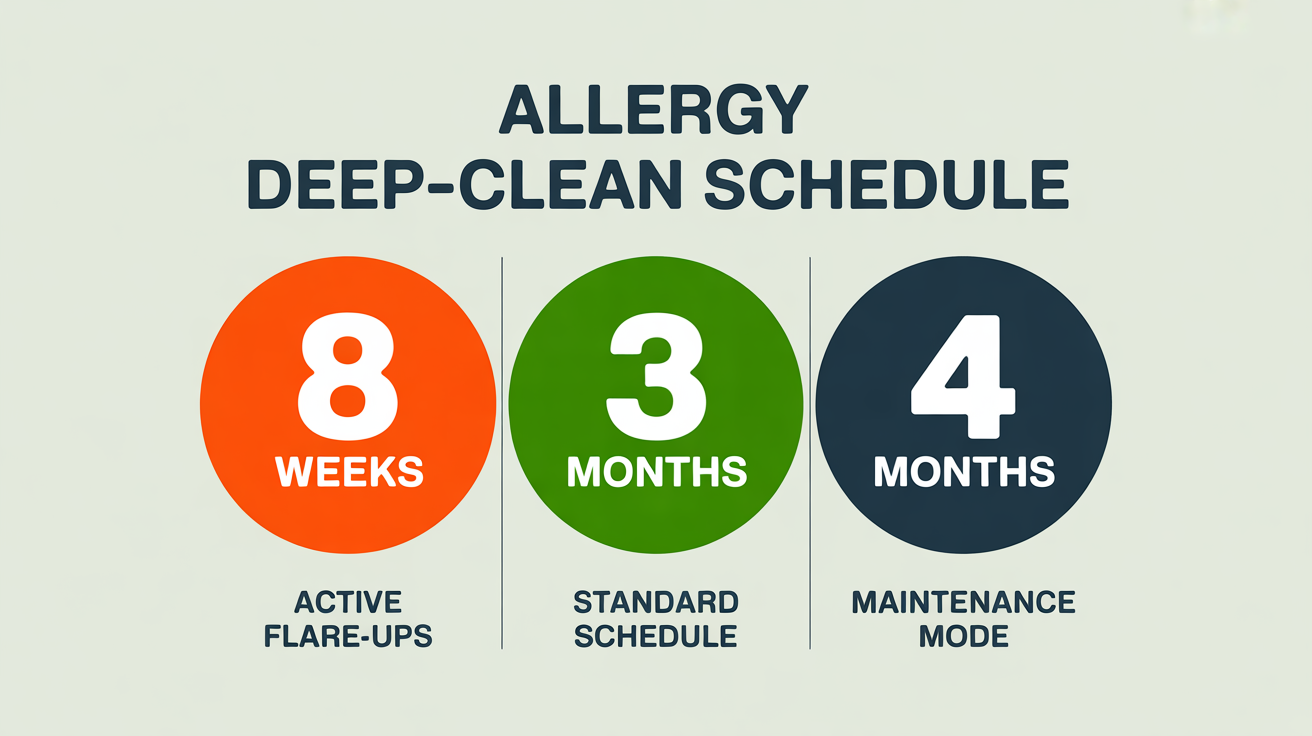
For a household where symptoms are active, the answer is three months. Not six, not annual. That number comes from how fast the trigger populations rebuild — dust mite colonies double approximately every 3 weeks in warm, humid Australian conditions, and a deep clean drops the population by 80–90% but does not eliminate it.
If symptoms are stable and you have introduced strong maintenance routines (HEPA vacuuming weekly, hot-wash bedding, dehumidifier in winter), you can stretch to four months. If symptoms are severe or someone is on a long medication course to manage them, two months is the right answer until things settle.
What this looks like in practice for a 3-bedroom Wangaratta home with one asthmatic and a dog: a four-hour deep clean every 13 weeks, with a fortnightly regular clean between visits, and HEPA vacuuming twice a week between regular visits. That is the schedule we see hold symptoms at their lowest.
Room by room — what we focus on in an allergy clean
The room order matters. We start with the rooms where the highest trigger load lives and work toward the lowest, so we are not re-contaminating cleaned spaces.
- Bedrooms first. Strip and hot-wash all bedding (60°C or above kills mites). Vacuum every mattress for at least 5 minutes per side with a HEPA vacuum. Vacuum mattress protectors. Vacuum inside wardrobes — especially under stored bedding. Wipe ceiling fans and wardrobe shelves.
- Living areas. Vacuum upholstery twice — once to dislodge, once to lift. Vacuum curtains from top to bottom. Wipe TV unit, side tables, top of bookcases. If carpets, vacuum in two perpendicular directions to lift trapped dander.
- Bathrooms. Treat grout for mould (vinegar + bicarbonate, or a fungicidal cleaner). Clean exhaust fan housing — mould often lives here. Check shower seals and silicone. Wipe inside the vanity, especially behind the basin.
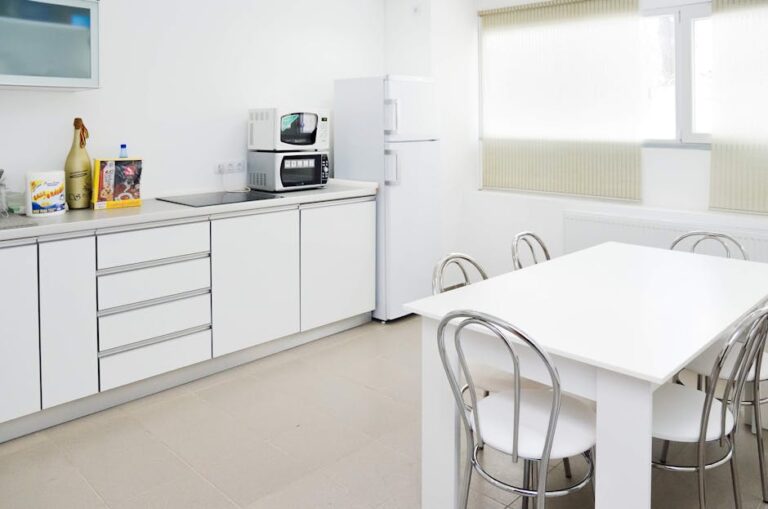
- Kitchen. Often lower trigger load, but vacuum the kickboard and behind/under appliances where pet hair collects.
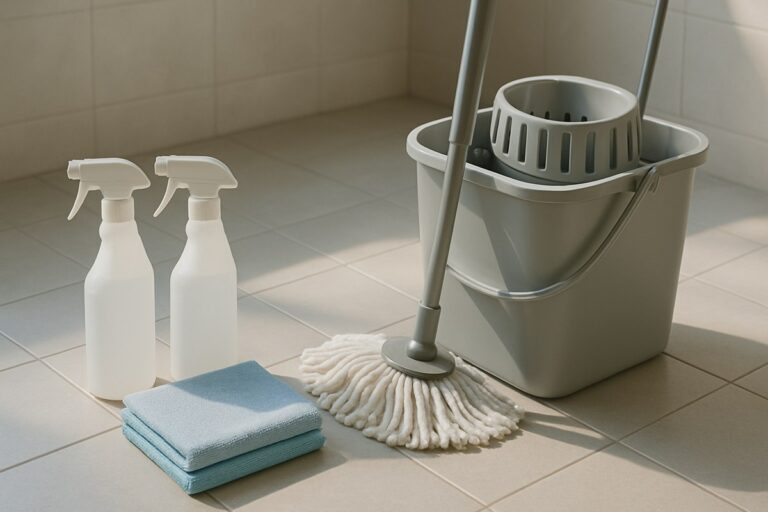
- Last — hard floors and entryways. Damp-mop after everything else is done so resettled dust gets picked up.
Want a clean that actually helps with allergies?
Free walkthrough. Fragrance-free options. HEPA-vacuumed, room-by-room.
The HEPA difference — what your vacuum probably isn’t doing
Standard vacuums collect 90–95% of visible debris, but particles under 10 microns (dust mite droppings, pet dander) often pass through the filter and re-enter the room air. A HEPA-certified vacuum captures 99.97% of particles down to 0.3 microns. For an allergy household, that is the difference between a clean and a clean that actually helps.
We bring HEPA-rated vacuums to every allergy clean as standard. We also bring a sealed canister system so what we vacuum stays vacuumed — no airflow back through the cleaner that pushes fine particles back into the room.
If you are buying your own vacuum and someone in the home has allergies, the three things to ask: HEPA-rated filter (not “HEPA-style”), sealed system (no leakage around the canister), and dust-cup or bag that empties without a cloud. Cheapest acceptable models start around $400.
Indicative schedules from 100+ allergy households across Wangaratta and Northeast Victoria, 2024-2026.
Four habits that hold the line between deep cleans
The deep clean does the heavy lifting. These four habits stop the trigger populations from rebuilding too quickly between visits.
- Hot-wash bedding weekly. 60°C or higher. This is the single highest-leverage habit for dust-mite households.
- HEPA-vacuum carpets and upholstery 2× per week. Quick passes, not deep cleans. Frequency beats depth.
- Run a dehumidifier in winter. Below 50% relative humidity, mites and mould both struggle.
- Brush and wipe pets twice weekly. Less dander shed at source means less to vacuum at home.
When mould is the trigger — when to act fast
Mould is the trigger that escalates fastest, and the one most under-treated. If anyone in the house has experienced a sudden allergy flare-up that did not used to be a problem, check for visible mould in three places first: shower silicone, behind any furniture pushed against an external wall, and inside the washing machine seal.
Small patches respond to vinegar or fungicidal cleaner. Patches over 1 m² in total area, or anything growing through paint or behind plasterboard, need professional remediation — cleaning the visible patch without fixing the moisture source guarantees regrowth. The Victorian Department of Health publishes a clear public guide on when home remediation is enough and when professional help is needed.
How we work with allergy households
We tell you what we use before we start. Every cleaning product we bring is on a list we share — no surprise chemistry. If anyone reacts to a specific class of cleaner (chlorine, fragrance, citrus), we substitute. We use fragrance-free options as default for allergy households.
We work room-by-room with a defined order, never zig-zagging. We bring our own HEPA vacuum so you do not have to. We photograph the before-and-after for accountability — and for repeat allergy households, those photos become the baseline we measure against on the next visit.
To talk through what an allergy-focused clean would look like in your home, request a free quote or call 0493 295 032. We service Wangaratta, Beechworth, Benalla, Bright, Myrtleford, and 90+ towns across Northeast Victoria.
- ✓Hayfever, asthma, or eczema flares when you walk into the house
- ✓Last deep clean was more than 3 months ago
- ✓Visible mould on grout, silicone, or anywhere behind furniture
- ✓Pets have moulted heavily in the last month
- ✓Bedding hasn’t been hot-washed in 2+ weeks
- ✓Carpets feel slightly damp underfoot (humidity above 60%)
- ✓Vacuum is ‘HEPA-style’ instead of certified HEPA
Frequently Asked Questions
How quickly will I notice the difference after the first allergy deep clean?+
Will you use fragrance-free products?+
Can you treat the mould patch in our bathroom?+
Do I need to remove my pet during the clean?+
Is a HEPA vacuum really worth the cost?+
How long does an allergy-focused deep clean take?+
Will the deep clean help with hayfever or just dust-mite allergies?+
Can you advise on what to change in our home to help long-term?+
Sources & further reading
- Indoor allergens and asthma triggers Asthma Australia
- Dust mites — fact sheet Healthdirect Australia
- Pet dander and allergies in the home Australasian Society of Clinical Immunology and Allergy
- Mould in the home — health guidance Department of Health Victoria
- Indoor air quality at home — guidance Australian Government Department of Health
- Cleaning the home — Better Health Channel Victorian Department of Health
Ready for a Clean That Drops Symptoms?
Free quote. Same owner-operator every visit. HEPA-vacuumed. Wangaratta + 90 towns across Northeast Victoria.