A regular clean of a living room takes 15 minutes. A deep clean takes an hour. The extra 45 minutes goes into seven zones that a weekly vacuum-and-dust always skips — and they are the zones that decide whether the room feels fresh or just tidy.
Why the living room hides more dust than you’d think
The living room is high-volume air-flow space. Anything light enough to float — pet hair, dust, dander, pollen — moves through it and settles where there is no air movement. That means on top of bookshelves, behind picture frames, on ceiling fan blades, in skirting board corners, and inside upholstery seams.
Regular cleans handle the visible horizontals. A deep clean handles the verticals, the hidden zones, and the soft furnishings — which together hold more dust than the visible surfaces by a wide margin.
Step 1 — Move the furniture
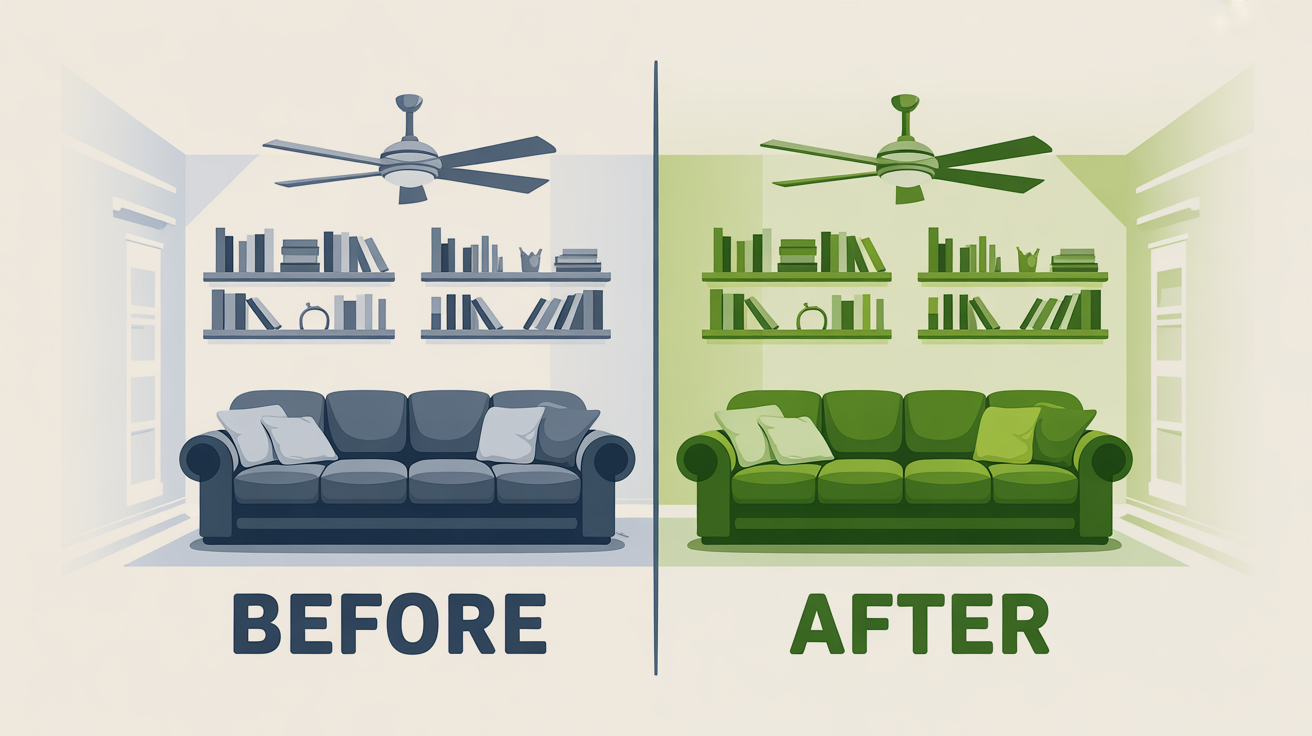
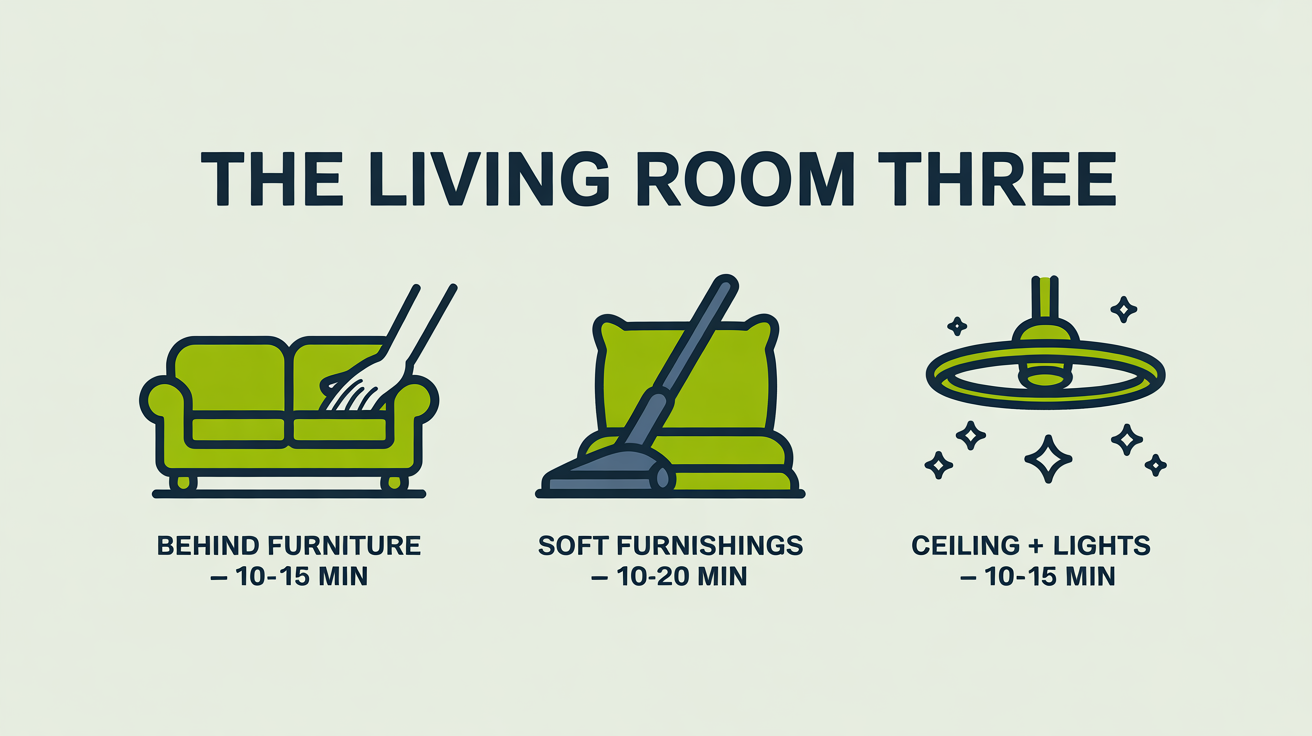
Every couch, armchair, side table, and coffee table comes out from the wall. Behind every one of them is years of accumulated dust, lost coins, pet hair, and crumbs. This is the single biggest difference between a regular clean and a deep clean.
- Move couches, armchairs, side tables, coffee table, TV unit
- Vacuum the floor underneath each one
- Wipe the back of furniture pieces (dust collects on the upholstery back)
- Vacuum skirting boards along the wall behind
- Wipe the wall behind for any scuff marks
- Reset furniture to its position (or move slightly so wear patterns shift)
Step 2 — Soft furnishings
Sofas, armchairs, cushions, and curtains hold roughly 60% of indoor dust in a typical living room. Vacuuming them with a HEPA-rated machine is the single biggest improvement in air quality.
- Vacuum sofa cushions — top, bottom, and seams
- Vacuum under cushions (the worst dust zone in any sofa)
- Vacuum upholstery on the arms and back
- Vacuum curtains from top to bottom (use a soft brush head)
- Wash cushion covers if removable
- Spot-treat any noticed stains while you have access
Step 3 — Ceiling fan + light fittings
Ceiling fan blades collect dust on top — the side gravity makes inaccessible. When the fan turns on, that dust gets distributed back through the air.
- Climb ladder, dust top and bottom of every blade
- Wipe centre housing
- Clean light shade interiors (especially pendant lights)
- Wipe smoke detector housings
- Wipe wall sconces and lampshade interiors
Want a living room that feels actually fresh?
Free walkthrough. Behind the furniture, soft furnishings, the lot.
Step 4 — Skirting boards, architraves, and door tops
These collect a chalky outline of dust over months. A damp microfibre cloth restores them in minutes — but it is the kind of detail work that a 15-minute regular clean never gets to.
- Wipe full perimeter of skirting at floor level
- Wipe top of doors (above eye-line — always dusty)
- Wipe door architraves on all four sides
- Wipe air-con vents (where pet hair collects around the grille)
- Wipe window sills + reveals
- Wipe window tracks (vacuum first if very dusty)
Step 5 — The TV unit + the cabling behind it
TV units and behind-TV cabling are dust magnets — static charge from electronics pulls dust in. Every cable, every shelf, every console needs attention.
- Pull TV unit out from wall
- Vacuum and wipe wall behind
- Dust each cable individually (yes, really — they hold dust)
- Wipe TV screen with screen-safe microfibre
- Wipe all shelves and console fronts
- Dust around speaker grilles
Step 6 — Bookshelves and decor
Shelves are deceptive — they look fine until you actually wipe and see the dust on the cloth. Top shelves especially.
- Remove items from each shelf in sections
- Wipe shelf surface and back wall
- Dust each book spine if there is visible dust
- Wipe picture frame tops and bottoms
- Wipe vases, sculpture, decor — both inside and outside
Step 7 — Final floor pass + walkthrough
After all the moved furniture, dusted shelves, and vacuumed soft furnishings, the floor needs a final reset.
- Full vacuum across the room with HEPA
- Spot-treat any noticed stains
- Mop hard floor sections with neutral cleaner
- Walk the room with you before leaving — confirm everything
Request a free quote or call 0493 295 032.
- ✓Visible dust on top of picture frames or bookshelves
- ✓Sofa cushions have visible crumbs underneath
- ✓Ceiling fan blades have dark tops you can see when fan is off
- ✓Skirting boards have a grey chalky outline
- ✓Air feels stale when you walk in
- ✓Pet hair on upholstery doesn’t fully vacuum off
- ✓Last deep clean was more than 6 months ago
Frequently Asked Questions
How often should I deep clean the living room?+
Will you move heavy furniture safely?+
Can you spot-clean upholstery stains?+
Do you take cushion covers off and wash them?+
Will you clean the TV screen?+
How long does a living-room-only deep clean take?+
Can you clean cables without unplugging them?+
Will you climb a ladder for the ceiling fan?+
Sources & further reading
- Cleaning the home — Better Health Channel Victorian Department of Health
- Indoor allergens and asthma triggers Asthma Australia
- Dust mites — fact sheet Healthdirect Australia
- Pet dander and allergies in the home Australasian Society of Clinical Immunology and Allergy
- Indoor air quality at home — guidance Australian Government Department of Health
Ready for a Real Living-Room Reset?
Free quote. Fixed price. Wangaratta + 90 towns across Northeast Victoria.