An honest list of every cleaner we bring to your home — brand by brand, with the reasons. No greenwashing claims. No vague “natural” badges. Here is exactly what we use and what we will not.
The decision framework
- Safe for people first. Anyone with allergies, kids, pets in the home — chemistry matters.
- Safe for the home second. Wrong chemistry can damage natural stone, vintage tapware, painted finishes.
- Effective third. A product that does not work is a worse environmental choice than a stronger one used once.
- Eco-impact fourth. Aquatic toxicity, biodegradability, plastic packaging.
Kitchen + general surfaces
- White vinegar + water (1:1). Bench tops, glass, mirrors. Cheap, safe, effective.
- Bicarbonate of soda paste. Sinks, light scrub on stainless. Non-abrasive.
- Australian Eco-friendly multi-surface (Earthwise, Koala Eco). Where vinegar is not enough.
Our chemistry — four priorities
Safety first
People
Kids + pets + allergies
No damage
Surfaces
Stone, vintage, painted finishes
Actually works
Effective
Worse to need 3 passes
Bathroom
- Citric acid solution. Mineral build-up on glass and tapware. Stronger than vinegar.
- Australian eco-friendly bathroom cleaner. Daily wipe-down.
- Hydrogen peroxide for grout mould. Less harsh than bleach. Effective.
- Tea-tree oil dilution. Surface antimicrobial. Fragrance-free option available on request.
“Asked Hamish for fragrance-free. He brought a different kit on the next visit. My eczema cleared within a fortnight.”
— Mia P, Wangaratta · Sensitivity-focused household
Floors
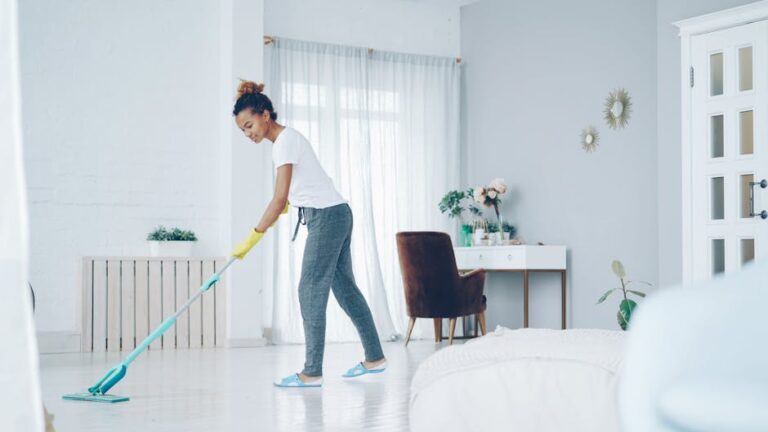
- Plant-based floor cleaner (concentrate). Dilutes properly, less plastic.
- Microfibre mop heads. Reusable, washable at 60°C, replaced annually.
- For natural stone: stone-safe cleaner (pH neutral).
Ready when you are
Want honest chemistry?
Free walkthrough. Sensitivities accommodated.
What we will NOT use
- Bleach as a general cleaner (occasional spot use only)
- Ammonia-based products (irritant)
- Triclosan-containing antibacterials
- Heavily fragranced air-fresheners
- Anything with quaternary ammonium compounds in households with respiratory sensitivity
- Single-use disposable wipes (we bring microfibre)
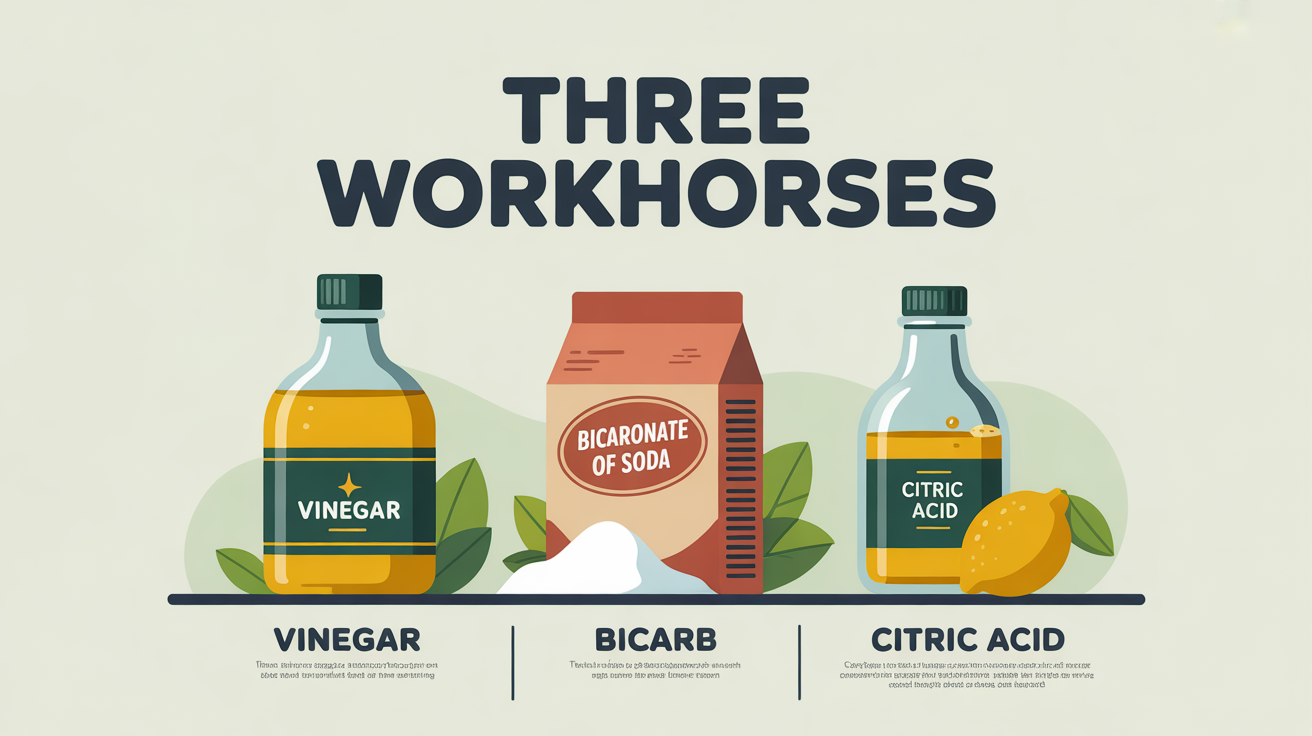
Three workhorse cleaners we use most
VINEGAR + WATER
1:1 dilution
Bench, glass, mirrors
Cheapest and safest. Handles 70% of general surface work.
BICARB PASTE
Light scrub
Sinks, stainless
Non-abrasive but mildly alkaline. Lifts surface grime gently.
CITRIC ACID
Mineral lifter
Glass + tapware
Stronger than vinegar. Best for mineral build-up.
If you have sensitivities
Tell us at the walkthrough. We have fragrance-free, dye-free, plant-based versions of every product we use. We will substitute the entire kit if needed.
For asthma, eczema, and chemical-sensitivity households, our default is the gentlest available chemistry.
Request a free quote or call 0493 295 032.
“Honest about what works and what does not. Vinegar for most, citric for bathrooms, never bleach. I trust it.”
— George T, Beechworth · Long-term customer
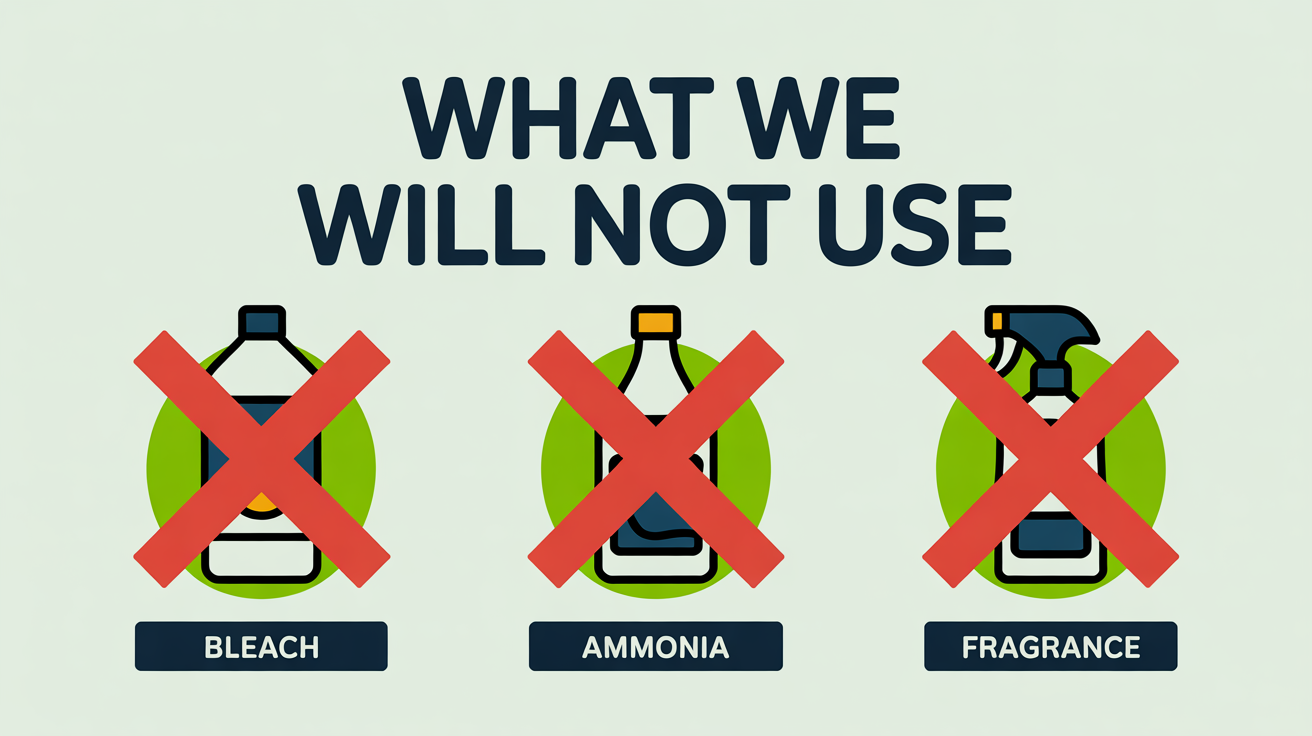
Three things we will not use
BLEACH
Avoid
Spot use only
Too harsh as a general cleaner. Used only in narrow cases (e.g. mould).
AMMONIA
Avoid
Respiratory irritant
Not used anywhere. Better alternatives exist.
FRAGRANCE
Optional
Default off
Default fragrance-free for any allergy household. Mild scent on request.
If you have sensitivities — flag at walkthrough
- ✓Allergies (any kind)
- ✓Asthma
- ✓Eczema or skin sensitivity
- ✓Chemical sensitivity
- ✓Babies or toddlers in the home
- ✓Pets (especially birds — very chemical-sensitive)
- ✓Preferred specific brands or excluded ingredients
Frequently Asked Questions
Are eco-friendly products as effective?+
For 80% of household cleaning, yes. For severe build-up (years of soap scum, baked oven residue), commercial chemistry sometimes needed.
Do you use bleach?+
Spot use only — for grout mould or specific applications. Never as a general cleaner.
What if I want commercial cleaners used?+
We can — but we will tell you the trade-offs first. Some commercial cleaners damage finishes.
Are your products safe for pets?+
Yes — neutral and well-diluted. We particularly avoid anything that off-gases (bad for birds especially).
Are they safe for natural stone?+
Stone-safe options used by default for marble, limestone, travertine. Acids (vinegar, citric) avoided on these surfaces.
Can I provide my own products?+
Yes — happy to use yours. Tell us at the walkthrough.
Do you bring single-use wipes?+
No. We use washable microfibre cloths, replaced regularly.
What’s the difference between Earthwise and Koala Eco?+
Earthwise — NZ-made, multi-surface focus. Koala Eco — Australian, broader range. We use both depending on application.
Sources & further reading
- Cleaning the home — Better Health Channel Victorian Department of Health
- Indoor air quality at home — guidance Australian Government Department of Health
- Indoor allergens and asthma triggers Asthma Australia
- Consumer guarantees on services Australian Competition and Consumer Commission
- Dust mites — fact sheet Healthdirect Australia
Ready when you are
Ready for Honest, Eco-Conscious Cleaning?
Free quote. Wangaratta + 90 towns across Northeast Victoria.