The obvious benefit of a regular cleaner is that the house is clean. The seven less-obvious ones — from sleep quality to relationship friction to resale value — are why people who book regularly almost never stop.
1. You stop thinking about it
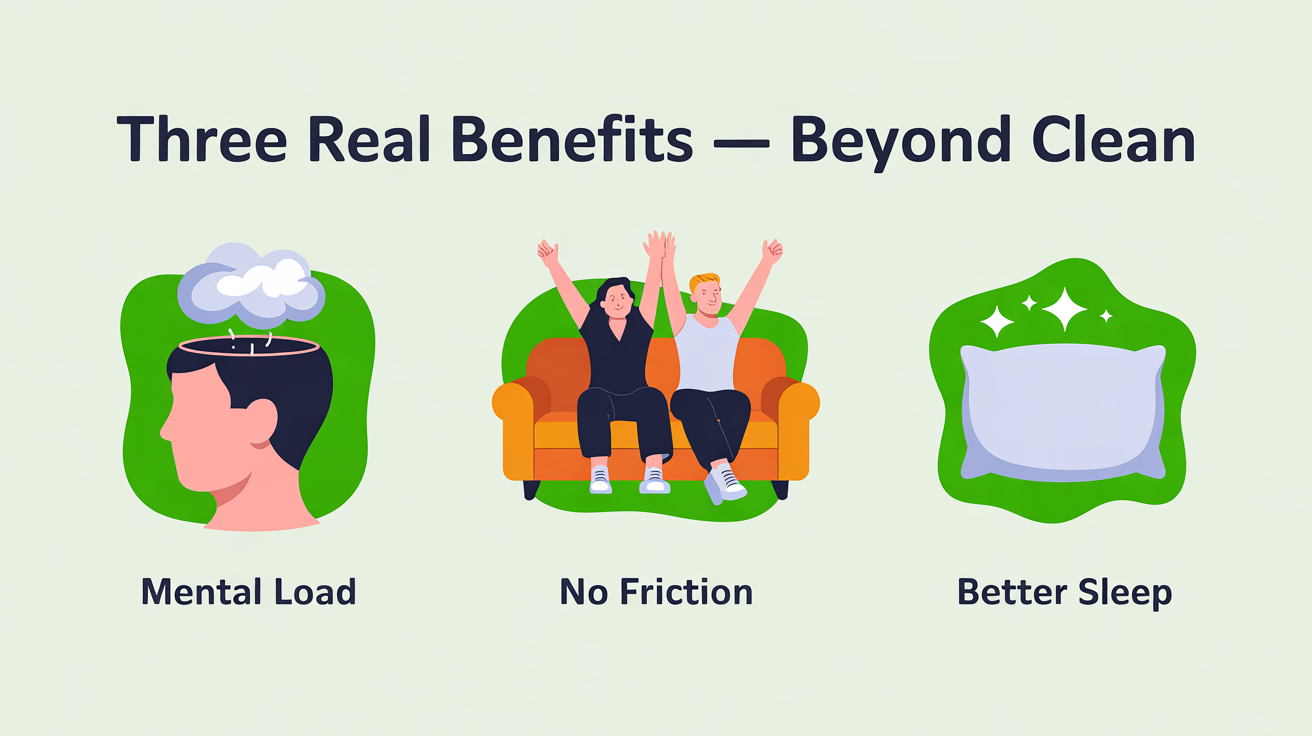
Cleaning sits in the background of every household — a low-level mental load that compounds. “The bathroom needs doing.” “I should vacuum.” “Why is the kitchen never clean?” A regular cleaner removes that loop. The home becomes something you live in, not something you manage.
Mental-load research consistently finds that domestic cognitive labour adds 5-7 hours of subliminal effort per week. Outsourcing this is the single most-reported benefit our regular customers cite.
2. Allergies and asthma ease
Regular HEPA vacuuming, weekly bedding refresh, and the dust-baseline reset of a professional clean drops indoor allergen load measurably. Asthma Australia recommends weekly vacuuming as a standard non-medication intervention for asthma management. A regular cleaner makes that consistent in a way most household routines do not.
3. Reduced household friction
Cleaning is one of the top sources of household friction in Australian relationships. Who does the kitchen? Who deep-cleans the bathroom? Who vacuums under the bed? A regular cleaner removes the negotiation entirely. The house gets cleaned by neither of you — by us.
The dollars spent often save the equivalent in the form of fewer arguments, smoother weekends, and more time available for the things you actually want to do together.
4. Fixtures and finishes last longer
Soap scum etches chrome. Lime scale damages tapware. Dust shortens range-hood motor life. Mould degrades grout. Regular cleaning catches each of these before they compound. Annual savings on fixture and appliance maintenance often equal half the cleaning bill — and the home holds its value better at resale.
Want your weekends back?
Free walkthrough. Most benefits arrive within the first 4 weeks.
5. Your home is hostable any time
A weekly clean means you can have anyone over, any day, without a panic clean. Friends drop in. Family arrives unannounced. Tradies visit. The house is presentable on Tuesday afternoon the same as it is on Saturday morning.
6. You sleep better
Mattress vacuuming drops dust-mite populations. Hot-wash bedding kills accumulated allergens. Less clutter in the bedroom means lower visual stress at bedtime. Sleep researchers find these add up to measurable sleep-quality differences — and households with regular cleaners report higher subjective sleep satisfaction.
7. You get your weekends back
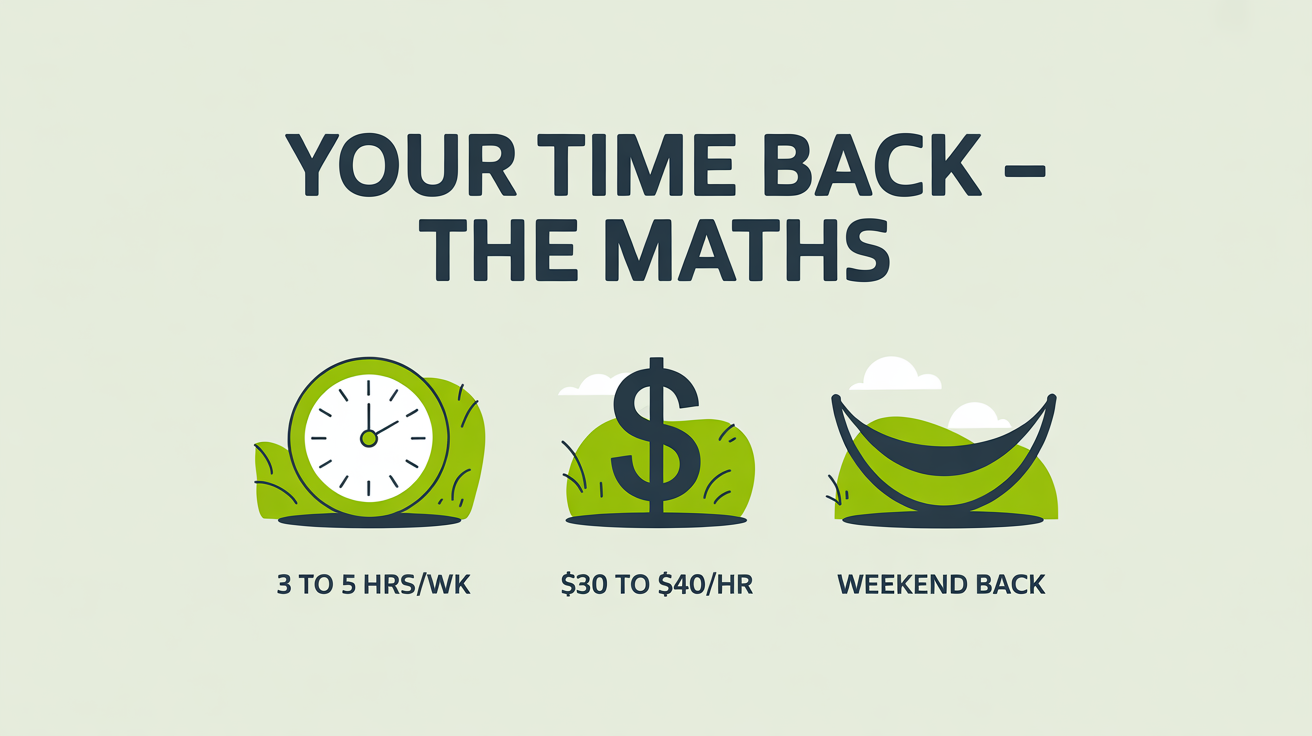
The average Australian household spends 3-5 hours per week on housework. A regular cleaner does that for you — at a rate that, divided by the hours, comes to about $30-$40/hr for your time. If you value your weekend hours more than that, the maths works.
Request a free quote or call 0493 295 032.
- ✓You feel resentful about cleaning every week
- ✓Cleaning is a source of friction in the household
- ✓Your weekend hours are worth more than $30-$40/hr
- ✓Someone has allergies, asthma, or eczema
- ✓You host guests at least once a fortnight
- ✓Your home has been gradually drifting in appearance
- ✓You’ve thought about hiring help but kept putting it off
Frequently Asked Questions
What’s the biggest reported benefit?+
Will my allergies actually improve?+
Is it worth it if my home is small?+
Will the cleaner make my home spotless?+
How long does it take to feel the benefits?+
What if I’m a clean person — is it still worth it?+
Will I lose my cleaning skills?+
Is it OK to want a clean house without doing it myself?+
Sources & further reading
- Indoor allergens and asthma triggers Asthma Australia
- Cleaning the home — Better Health Channel Victorian Department of Health
- Indoor air quality at home — guidance Australian Government Department of Health
- Consumer guarantees on services Australian Competition and Consumer Commission
- Dust mites — fact sheet Healthdirect Australia
Ready to Get Your Time Back?
Free quote. Same owner-operator every visit. Wangaratta + 90 towns across Northeast Victoria.