Related reading
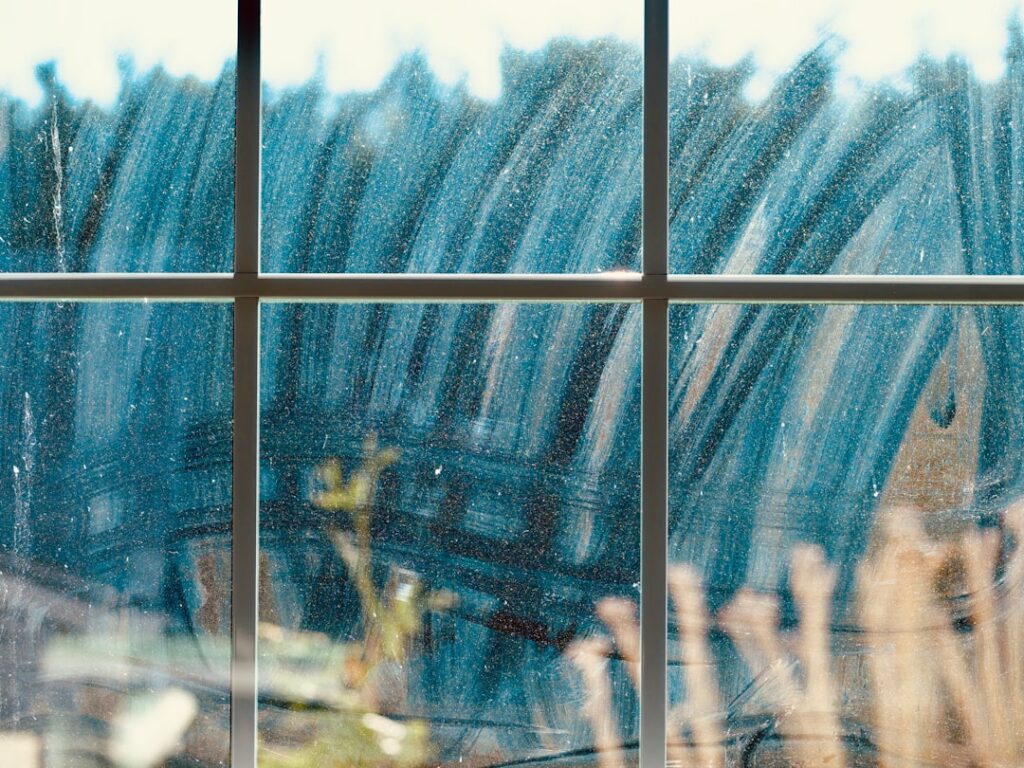
Streak-free windows look simple in the cleaning-product ads. In real life, most DIY window cleans end up with visible streaks the moment the sun hits the glass. Here’s why, and what professional window cleaners do differently.
Why DIY Window Cleans Streak
Three main reasons most DIY window cleans leave streaks:
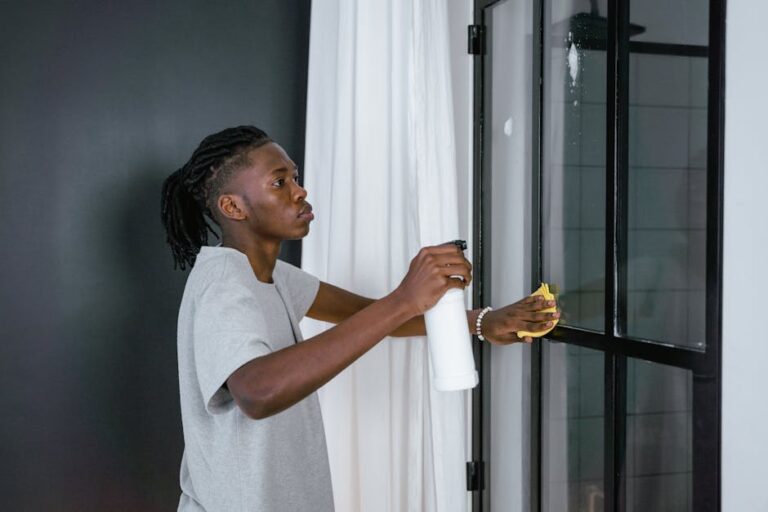
- Using paper towel instead of microfibre. Paper towel sheds tiny fibres on the glass and absorbs more solution than it lifts. Always use a clean microfibre cloth.
- Wiping in circles. Circular motion redistributes dirt across the glass instead of pulling it off. Always wipe in one direction (top to bottom or left to right), full strokes.
- Working in direct sunlight. The cleaning solution dries on the glass before you can squeegee it off. Result: streaks. Clean windows in shade or early morning.
The Professional Technique
What window cleaning professionals do, in order:
- Dry-dust the glass first. Removes loose dust, cobwebs, dirt. Saves chemistry having to dissolve everything from a wet start.
- Apply a properly-mixed solution. Pure water + a small amount of dish liquid is the cheapest reliable solution. Or commercial window cleaner thinned with water. Spray generously — don’t skimp.
- Agitate with a t-bar washer. Loosens the dirt evenly across the full glass area. 15-20 seconds per window.
- Squeegee top-to-bottom in overlapping strokes. Each stroke overlaps the previous by about an inch. Wipe the squeegee blade clean between strokes.
- Detail the edges and corners. Use a clean dry microfibre folded to a point to wipe the bead of solution that always pools at the bottom edge.
- Check from the inside. Streaks are easier to see from the opposite side of the glass than the side you cleaned.
“Super reliable and easy to deal with. The house looked amazing after the clean and everything felt tidy and taken care of. Exactly what you want when you come home.”
Equipment Worth Owning if You DIY
If you DIY your own windows, three pieces of equipment make the difference between amateur and professional finish:
- A proper window squeegee (Unger or Ettore brand, 14-18 inch blade). $20-$30 at Bunnings. Lasts years.
- A t-bar washer with replaceable sleeve. The thing pros use to apply the solution. ~$15. The sleeve needs a wash after each use.
- 3-4 clean microfibre cloths in different colours. One for detailing edges, one for frames, others as backup. Buy a 12-pack at Bunnings for ~$15.
When Professional Cleaning Is Worth It
Professional window cleaning makes most sense for:
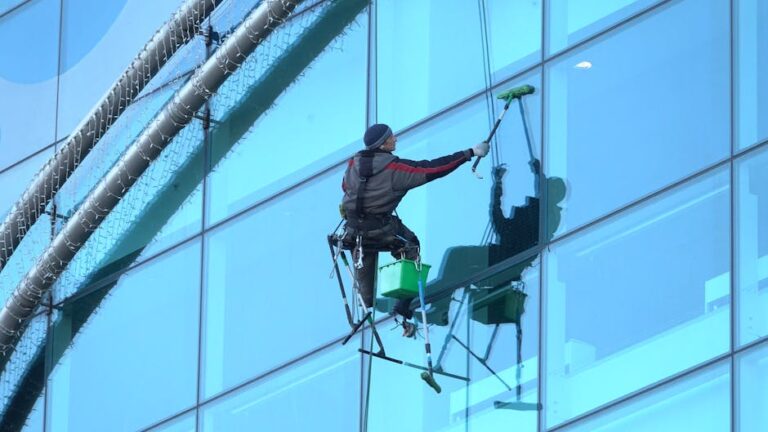
- Two-storey or hard-access windows (safety first)
- Large window areas where DIY time exceeds 2-3 hours
- Windows that haven’t been cleaned in 6+ months and have hard buildup
- Pre-event cleans (party, listing photos, family gathering) where you want a guaranteed streak-free outcome
For smaller homes with accessible windows, DIY with the right equipment works fine — and many homeowners enjoy it as a productive Saturday morning.
How You Get the Clean You Want
Streak-free windows are mostly about technique and patience, not spending more on chemistry.
No pushy sales tactics. We have a friendly conversation, walk through your home, agree the scope room by room, and quote in writing. You move forward at your own pace. People choose Green Koala because we explain how the work will be done before we start — not after.
We’ll walk you through the room-by-room checklist so you’re not caught off guard by what’s included and what isn’t. We’ll explain the difference between cadences (weekly, fortnightly, monthly) so you know what each one costs and what each one delivers. And we’ll match what we do to what your home actually needs.
Our goal is straightforward. We want you to walk into a properly clean home — and feel that exact “this is what I wanted” relief — every visit.
Get in touch with us today. We’ll review your situation, answer your questions, and help you choose the cleaning cadence that fits your home, your budget, and your routine.
How We Work With You
Our process is straightforward and designed around your needs.
Step 1: We Talk and Answer Your Questions
When you get in touch, we’ll call you back for a friendly 10-minute conversation. We’ll explain who we are, what we do, and most importantly, what we’re going to do for your specific home. We’ll answer every question you’ve got — about scope, pricing, frequency, products we use, anything.
Step 2: We Come Out and Look
We do a free walkthrough of your home — no pressure, no obligation. We agree the scope room by room, point out anything that needs special attention, and give you a written fixed-price quote on the spot. You’ll know exactly what’s getting cleaned and exactly what it’ll cost before any work starts.
Step 3: You Decide What Works Best
Take your time. Compare us with anyone else you’re considering. Once you’re ready, we’ll book the first clean — usually within 7 days — and confirm which cleaner will be coming to you each visit.
Step 4: We Stay With You
Recurring customers get the same cleaner each visit. Your cleaner learns your home, your preferences, your routine. Need to shift a date? Email or text us. Need extra hours one week? Just ask. We’re here for the long run.
Get in Touch With Us Today
If anything you’ve read here matches what you’re looking for, get in touch — we’ll have a 10-minute friendly chat, come out for a free walkthrough, and quote you in writing before any work starts. Same cleaner each visit, fixed-price quotes, room-by-room checklists you can see ticked off as we go.
- Get in touch: greenkoalacleaning.com.au/contact
- Phone: 0493 295 032
- Email: [email protected]
- Service area: Wangaratta and Northeast Victoria
Frequently Asked Questions
What’s the best DIY window cleaning solution?
Pure water + a small amount (about half a teaspoon per litre) of dish liquid. As effective as commercial products at a fraction of the cost. Some pros use vinegar instead, but the smell is strong.
Why do my windows streak even with new cloths?
Usually the technique, not the cloth. Wiping in circles, working in direct sun, or under-applying the cleaning solution all cause streaks regardless of cloth quality.
Is microfibre really better than paper towel?
Yes — significantly. Paper towel sheds fibres and absorbs unevenly. Microfibre lifts dirt and leaves glass dry. Pros never use paper.
Should I clean my windows before or after the garden gets cleaned?
After, ideally. Gardening kicks up dust and pollen that lands on windows. If you’re doing both as a spring clean, do the garden first then windows the next day.
How long should cleaning the windows of a 3-bedroom house take?
For a confident DIY person, 3-4 hours for inside-and-outside on a 3-bedroom. Pros usually do it in 2-3 hours because their gear is faster and their technique is more efficient.
Sources
- WorkSafe Victoria — Working at heights
- Choice — Window cleaning tips
- Bureau of Meteorology — Weather data for NE Vic
- CSIRO — Indoor air quality
- Australian Window Association — Cleaning guide
Information about home cleaning, NDIS funding, and bond cleaning standards changes from time to time. Linked content may change or become outdated. Please always contact us for help with your important cleaning decisions.